We know that the piracy enablers are at the top of the software piracy distribution process. The software “crackers” are individuals and groups who love to crack DRM and software licensing schemes. While many crackers are well-hidden, some are surprisingly visible on the Web and have established their own blogs to announce their crack releases.

Revenera Monetization Monitor: 2026 Outlook
501 senior leaders at global technology companies share their thoughts on monetization trends for 2026 and beyond. See the results >>>
How Piracy Groups Operate
The crack group Team SolidSQUAD (SSQ) is one such piracy group. They have been very active in the last few years and have routinely targeted high-value software in CAD, CAM, simulation, and other engineering industries. From our own experience, we know these groups do quality assurance (QA) on their work and have built up a following of users based on their success in producing high-quality crack software. This, in turn, contributes to a high number of organizations adopting their specific releases – something else we know by looking at our customers’ aggregated infringement data.
Check this out:
Monetization Monitor: Software Piracy and Compliance 2023
What We Learned from SSQ Blog Analysis
We recently dug into this a bit further, leveraging the SSQ blog to do some analysis on their followers.
- There are 664 blog followers and we analyzed 100 individuals who had Google+ profiles – of the 100:
- 46 were associated with actual companies,
- 5 were associated with universities,
- 1 was associated with a foreign government, and
- 48 were undetermined
- We were pretty surprised by the number of individuals who were easily traced to manufacturers and other companies
- These include a world leader in the automotive castings industry, a top international electronics technology company, and one of the leading CAD software companies (presumably keeping an eye out for crack activity on its software)
- Using the individual’s profile, we could also identify their country of origin
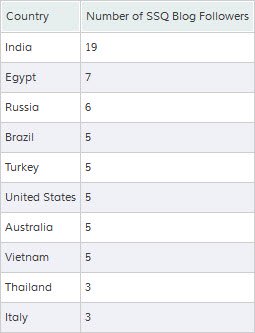
- Over 39 different countries were represented and the top 10 countries are shown below.
- Note that the US is in the top 10 – showing the scope of the trust in the group and the global exposure for adoption of pirated software.
- The number of related countries is also interesting since this group only releases the crack software to a Russian BitTorrent tracker – despite that, the majority of individuals interested in SSQ crack software were not Russian
What Does This Mean for Software Vendors?
What is clear is that many of the followers of this blog are not concerned with hiding their identities. While we should not confuse the crackers (SSQ) with the pirates (who presumably make up a good number of SSQ’s followers), this does underscore that technology companies contemplating how to stop software piracy focus their efforts on the accidental pirates who will pay for licenses and not the “committed pirates” who are far less likely to convert to a paying customer in the short or medium term.
Common Questions
Who are software crackers, and how do they enable piracy?
Software crackers are individuals or groups that break DRM and licensing protections, making it possible to distribute pirated versions of software. They often operate online, and some even maintain blogs to announce their crack releases.
Why is Team SolidSQUAD (SSQ) significant in the software piracy landscape?
SSQ is a well-known crack group that targets high-value software in industries like CAD, CAM, and simulation. Their reputation for producing reliable cracks has attracted a global following, including individuals linked to companies, universities, and even government entities.
What should technology companies focus on when combating software piracy?
Rather than targeting committed pirates, companies should prioritize converting accidental pirates (those who might pay for licenses if given the opportunity), since committed pirates are far less likely to become paying customers in the short or medium term.