


Revenue analytics is one of the most important disciplines in software. Until recently, Annual Recurring Revenue (ARR) was relatively straightforward. Customers purchased licenses or subscriptions, renewed periodically, and growth was tracked through a familiar set of metrics.
However, AI capabilities, consumption-based pricing, shared credit pools, and hybrid models are changing how software is bought and sold. Revenue no longer comes solely from a contract signed 12 months ago. It comes from thousands of customer interactions happening every day.
Every feature used, entitlement activated, credit consumed and AI workflow executed generates a signal. The challenge for many is turning those signals into action. Without clear revenue analytics data, expansion opportunities are missed, customers quietly disengage, and pricing drifts from value delivered.
Value Signals Hidden in Product Usage
Sales forecasts and CRM records tell part of the revenue story, but detailed product usage data can reveal what customers are likely to do next.
A customer may be regularly hitting usage limits without informing their account manager. Another may be consuming AI features far more aggressively than expected. A third may have purchased a broad entitlement package but only adopted a fraction of the available functionality. Each scenario presents a commercial opportunity or potential churn risk.
This is where revenue analytics becomes so important. It connects customer behavior with business outcomes, helping organizations understand not only what customers bought, but how they derive value. The goal is to uncover patterns that influence retention, expansion, and long-term growth.
A spike in feature adoption might suggest readiness for expansion. Repeated service denials may indicate unmet demand. Declining engagement could signal a customer needs attention before renewal discussions begin. In isolation, these events may seem insignificant. Viewed together, they create a much clearer picture of future revenue.
Credit-Based Pricing Demands Visibility
Software monetization is more dynamic than ever, with credit-based pricing and hybrid monetization connecting revenue more closely to consumption. Instead of buying fixed access to individual products, users can now spend credits across features, applications, and AI capabilities as their needs evolve.
For customers, this flexibility is attractive because it allows them to consume value where and when they need it. For producers, it creates opportunities to increase adoption, encourage product discovery, support burst capacity, and cover variable AI infrastructure costs.
However, credit-based models depend on strong revenue analytics. Providers need visibility into how credits are consumed and distributed across products, while customers need transparent consumption data to verify usage, understand charges, and trust the accuracy of their billing.
Making Your Revenue Analytics Work
Most technology companies have no shortage of data. The real difficulty lies in finding the data that matters and translating it into actions that support revenue growth. That becomes significantly easier when entitlement management, licensing, and analytics operate from a common source of truth.
Revenera’s Monetization Analytics combines entitlement and usage data to help software producers uncover actionable insights across the entire customer lifecycle. The Analytics Dashboard provides several reports that help transform operational activity into commercial intelligence:
- Service Denials: When customers are denied access because they have exceeded available capacity or use rights, that behavior often signals a clear upsell or cross-sell opportunity. Repeated denials can reveal demand long before a customer formally requests additional capacity.
- License Usage: Feature-level usage reporting shows whether customers are fully utilizing the capabilities they have purchased. This helps identify adoption challenges, highlights opportunities for expansion, and can also support overage billing based on actual consumption.
- Fulfillment Analytics: Comparing available quantities against activations and consumption provides valuable context around customer health. High utilization may indicate expansion potential, while low utilization suggests an issue that may require intervention to prevent churn.
- Renewal Reporting: Real-time visibility into upcoming renewals helps teams stay ahead of customer conversations. Organizations can also analyze churn trends by region or customer segment, helping shape more targeted retention and re-engagement strategies.
Taken together, these insights help organizations move beyond basic reporting and develop a more sophisticated approach to SaaS KPIs and revenue analytics.
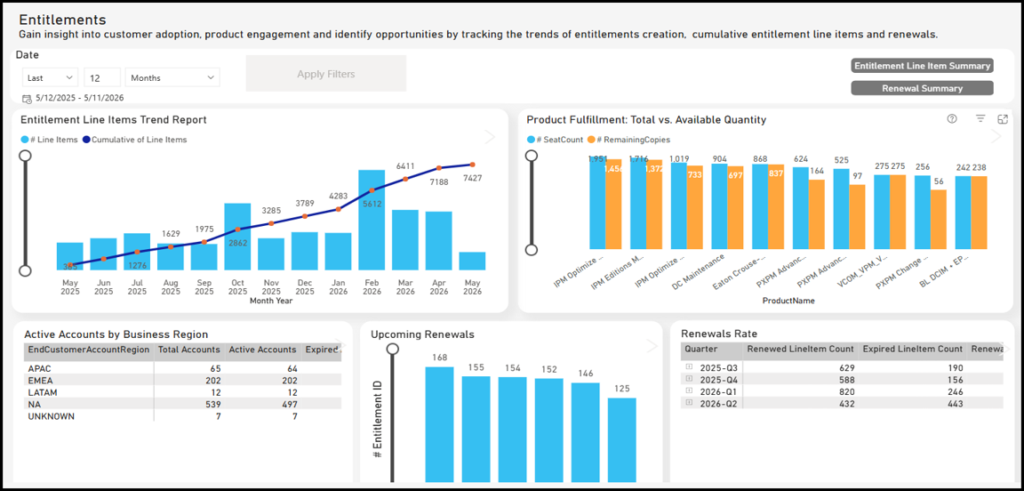
Sample dashboard from Revenera’s Monetization Analytics
Proactive Engagement
Customer demand can shift quickly. AI credits may be consumed faster than expected, while product or feature adoption spreads rapidly through some customer accounts but stalls in others. Waiting for a quarterly review cycle often means discovering opportunities or risks long after they first appeared.
Modern revenue analytics focuses on identifying meaningful signals as they emerge. Automated alerts can notify teams when service denials increase, usage thresholds are reached, consumption accelerates unexpectedly, or renewal risks begin to appear. This allows Sales, Customer Success, Product, and Operations teams to act while there’s still time to influence the outcome.
With configurable alerts and notifications, Revenera’s FlexNet Operations enables organizations to define the conditions that matter most and proactively notify the right teams when action is required.
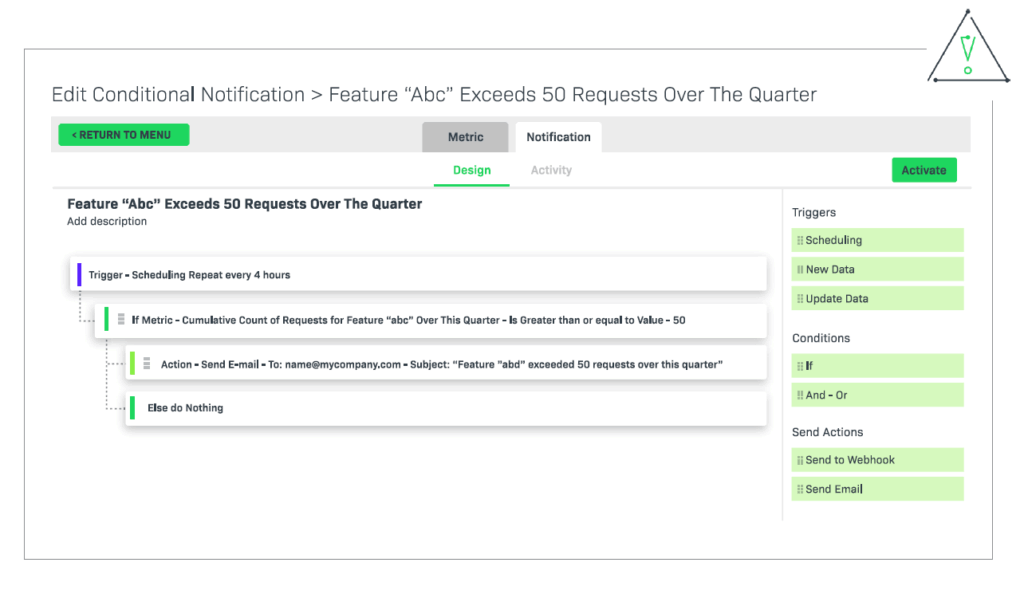
Sample notification that can be configured within FlexNet Operations
Driving Growth with AI Assistance
Increasingly, software producers are turning to AI to help uncover patterns hidden within large volumes of data.
Revenera MCP Server helps make this possible by enabling AI agents to interact directly with monetization data using natural-language queries. Instead of manually building reports or dashboards, teams can simply ask questions like:
- Which customers are approaching renewal in the next 30 days but have shown declining usage over the past three months?
- Based on last month’s data, where are the best upsell opportunities with customers approaching consumption limits?
- What patterns exist across customers who churned in the past six months, including links between geography, feature adoption, and pricing?
Watch the video to see how Revenera MCP Server can help you rationalize data across quote-to-cash systems and how a Bring Your Own Agent (BYOA) strategy can accelerate monetization insights.
Your Competitive Advantage
Forrester Consulting recently interviewed four product leaders to evaluate the value of Revenera. The resulting Total Economic Impact™ Study demonstrated a 426% ROI over three years with an initial payback period of under six months.
A key driver of this value was improved visibility into customer behavior, product usage, and revenue opportunities. As one executive explained:
“Our decision to move to Revenera was driven by the need to improve our financials for one of our [core offerings]. We realized we were significantly underselling its value, and with a major revenue shift ahead, we needed full visibility into our customer base. We needed to know who our customers were, what they had, and how they were using it.” – Director of Digital Operations, Energy
As the industry moves toward hybrid models and flexible AI pricing strategies, revenue analytics is essential. A single source of trusted data helps teams understand usage patterns, identify expansion opportunities, optimize pricing, and proactively reduce churn.
With deep software usage insights and configurable notifications, Revenera transforms monetization data into actionable intelligence, helping organizations improve customer experiences while driving sustainable revenue growth.
If you’d like to learn more about the full capabilities of Revenera’s monetization platform, please contact the software monetization team today.