
While many device manufacturers have become highly effective at building digital capabilities, far fewer have mastered how to monetize them. Closing that gap is driving a new wave of digital transformation trends, as producers aim to turn software, data, and AI into measurable business value.
Chris Rommel, Executive VP, IoT & Industrial Technology at VDC Strategy recently joined Michael Goff, Principal, Product Marketing at Revenera to discuss this shift and the implications it creates.
Watch the recording and read a breakdown of key insights below.
From Connectivity to Continuous Value
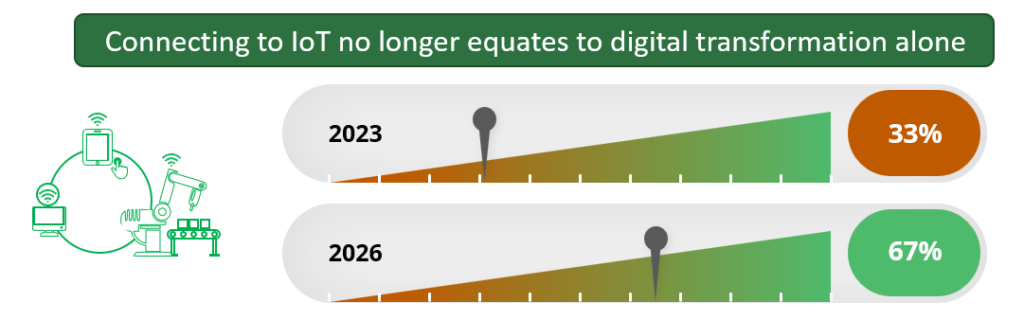
According to VDC’s research, in 2023 only 33% of devices were designed to be IoT connected. Today, that figure stands at 67%. This rapid movement shows just how quickly digital transformation trends are reshaping the market.
What’s changed more fundamentally is the nature of products. Devices are no longer static assets that deliver value at the point of sale. They’ve become dynamic systems that continue to generate value over time through software updates, analytics, and data-driven services.
This shift changes the relationship between manufacturers and customers. Instead of a one-time transaction, it becomes an ongoing exchange of value. That opens the door to recurring revenue and new digital business models, but only if companies can align pricing with how products are actually used.
The Monetization Gap Widens with AI
AI is amplifying both the opportunity and the challenge. Adoption is moving quickly, with many organizations already experimenting or deploying AI-enabled features. However, monetization strategies are struggling to keep pace, which is a defining theme across current digital transformation trends.
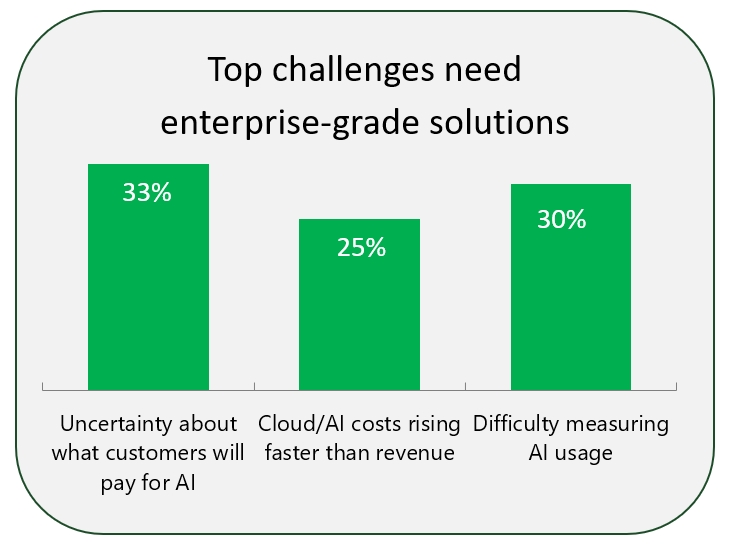
A significant portion of companies are still figuring out how to charge for AI capabilities. Some are offering features without any associated pricing model, often because they’re unsure what customers will pay. Others are experimenting but haven’t landed on a consistent approach.
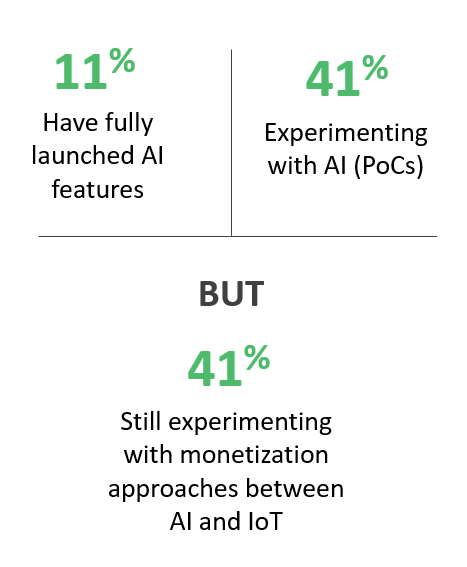
This creates a familiar pattern. It mirrors the early days of IoT monetization, when companies embedded software into products without a clear plan for profitability. The difference now is speed. AI is evolving faster, and the cost implications are more immediate.
Underlying infrastructure costs tied to AI workloads can scale quickly, so when AI pricing models don’t reflect usage, margins come under pressure. As consumption grows, revenue doesn’t always keep up. That’s forcing companies to rethink how they measure, price, and deliver value.
You Can’t Price What You Can’t Measure
At the center of modern monetization is software usage tracking. Without visibility into how products are used, pricing becomes guesswork. With it, companies gain the ability to align pricing with value. This shift is one of the most important digital transformation trends for monetization.
More manufacturers are investing in telemetry and analytics to track activation, feature usage, data consumption, and user engagement. That’s a major change from the past, when products often disappeared from view after shipment.
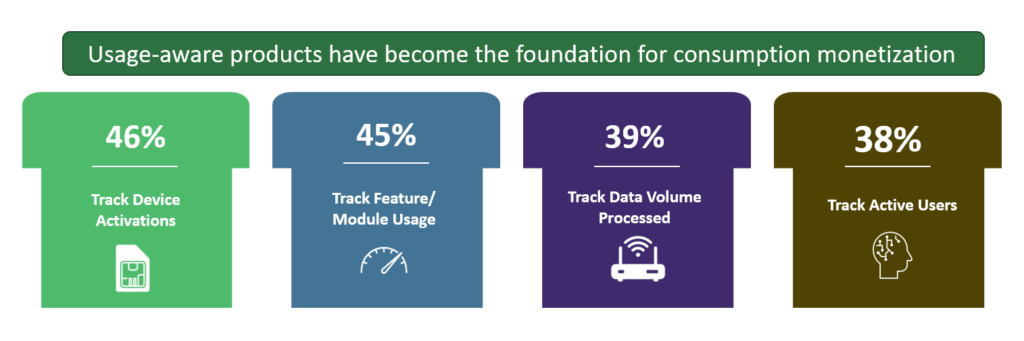
Usage data unlocks a range of opportunities. Companies can identify which features drive the most value, uncover upsell potential, and detect underutilization that may signal churn risk. It also supports more sophisticated pricing models that reflect actual consumption rather than assumptions.
Of course, collecting data is only part of the story. The real advantage comes from turning that data into actionable insight and connecting it to pricing and product roadmap decisions.
The Rise of Flexible Monetization Models
Traditional pricing is no longer enough for software-led devices. Fixed tiers and static packages struggle to keep up with the complexity of modern offerings, especially as AI and IoT continue to evolve. This shift is another clear signal in ongoing digital transformation trends.
In response, companies are exploring a broader mix of monetization models. Consumption-based pricing is gaining traction, alongside subscriptions and hybrid approaches that combine multiple elements. Outcome-based pricing is also emerging, with charges tied to value delivered.
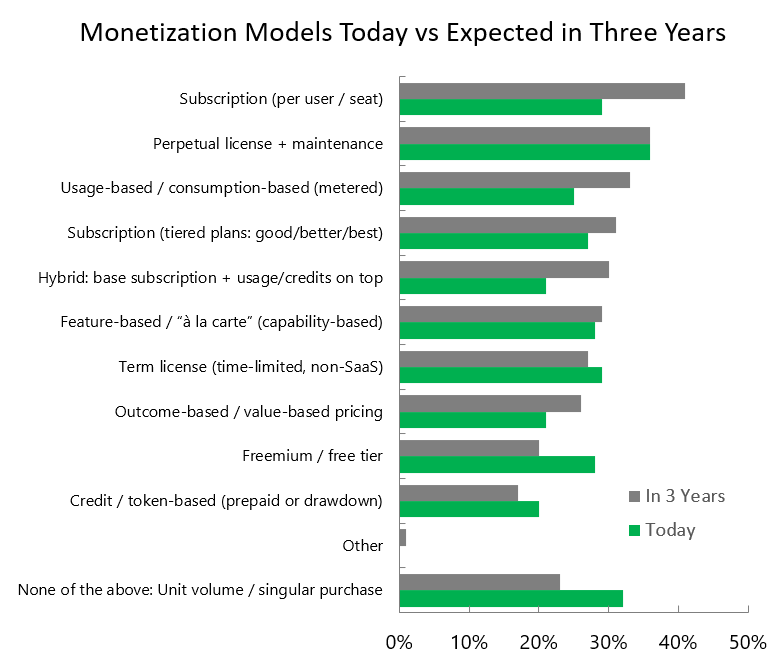
This reflects a need for flexibility. Different customers use products in different ways, and pricing needs to adapt. A one-size-fits-all model limits both revenue potential and customer satisfaction.
This is especially true when it comes to monetizing software in devices, where usage patterns vary depending on deployment, scale, and customer needs.
Pricing Agility is a Competitive Advantage
The pace of innovation in AI and IoT isn’t slowing down. New features are rolling out quickly, and customer expectations are shifting just as fast. In this environment, pricing can’t stay static. This is one of the most critical digital transformation trends for device manufacturers to address.
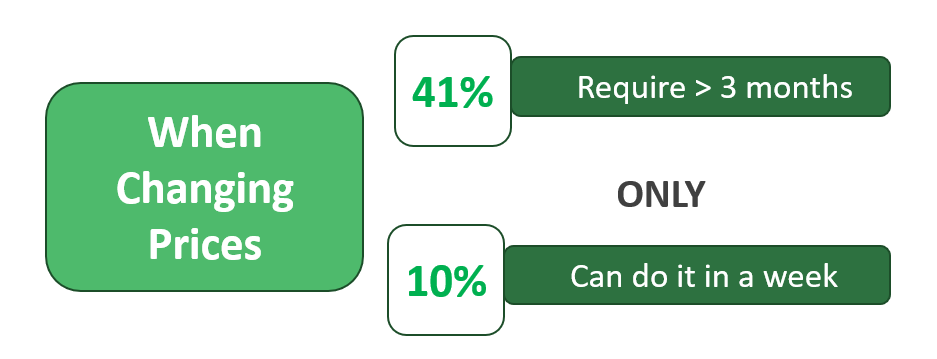
Organizations need the ability to adjust pricing models as their offerings evolve. That doesn’t mean constant changes that confuse customers. It means having the flexibility to respond when needed, backed by data and clear communication.
Pricing agility depends on both technology and alignment across teams. Product, finance, and operations need to work together early in the process. Monetization shouldn’t be an afterthought.
Companies that treat pricing as a core capability are far better positioned to capture the full value of their innovations.
Infrastructure as the Hidden Constraint
One of the most overlooked barriers to monetization is infrastructure. Many organizations are trying to implement modern pricing strategies on systems designed for traditional hardware transactions. This mismatch continues to show up across digital transformation trends.
Legacy billing, entitlement, and licensing systems often can’t handle real-time usage data or dynamic pricing. As a result, companies rely on manual processes and workarounds that slow everything down.
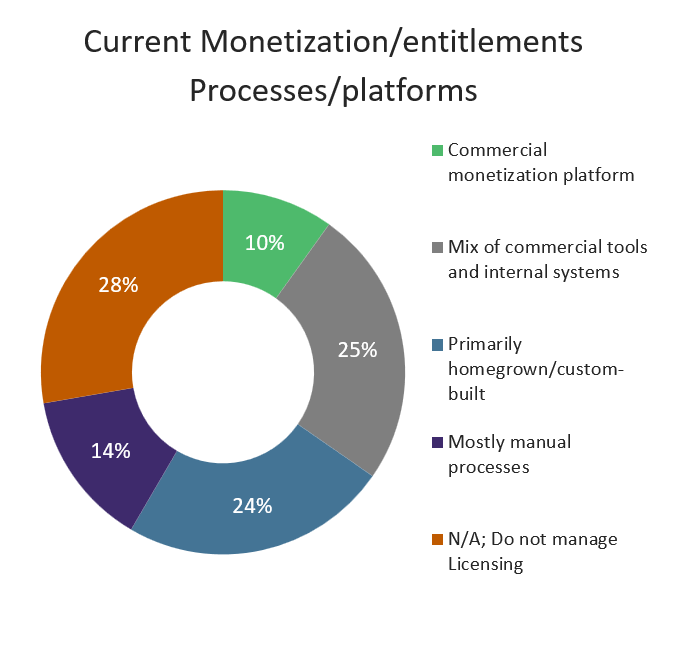
The impact is significant. In some cases, it can take months to implement a pricing change. In a market where products evolve rapidly, that delay becomes a serious competitive disadvantage.
Companies with purpose-built software monetization systems have a clear edge. They can experiment with pricing, align revenue with value much faster, and accelerate time-to-market for new releases.
Balancing Innovation, Cost, and Profitability
As AI adoption grows, so does the need to balance innovation with profitability. Rising infrastructure costs, combined with uncertain pricing strategies, can quickly erode margins. Managing this balance is becoming a defining factor in today’s digital transformation trends.
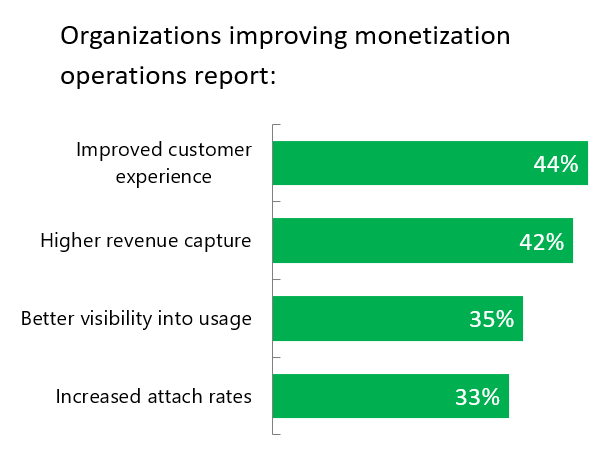
Usage-based monetization helps align revenue with cost, but only if companies can measure usage accurately and act on it. Without that foundation, it’s easy to scale usage without scaling profit.
Connecting usage data to pricing decisions is becoming a key differentiator, giving organizations control over costs while unlocking the full revenue potential of AI-driven offerings and hybrid monetization strategies.

Revenera Monetization Monitor: 2026 Outlook
501 senior leaders at global technology companies share their thoughts on monetization trends for 2026 and beyond. See the results >>>
Digital Transformation Trends That Matter
Software, data, and AI are transforming products into platforms that deliver ongoing value, but capturing that value requires a shift in mindset as manufacturers transition from hardware to software monetization as part of modern digital transformation trends.
Monetization needs to be treated as a strategic capability, supported by the right infrastructure and built into the product from the start.
The companies that succeed will be the ones that have the ability to measure usage, adapt pricing, and align business models with how customers actually use their products. This foundation will enable them to grow software-led recurring revenue and develop profitable AI monetization strategies at scale.
If you’d like expert advice on growing your software business and keeping up with the latest digital transformation trends, please contact Revenera today.