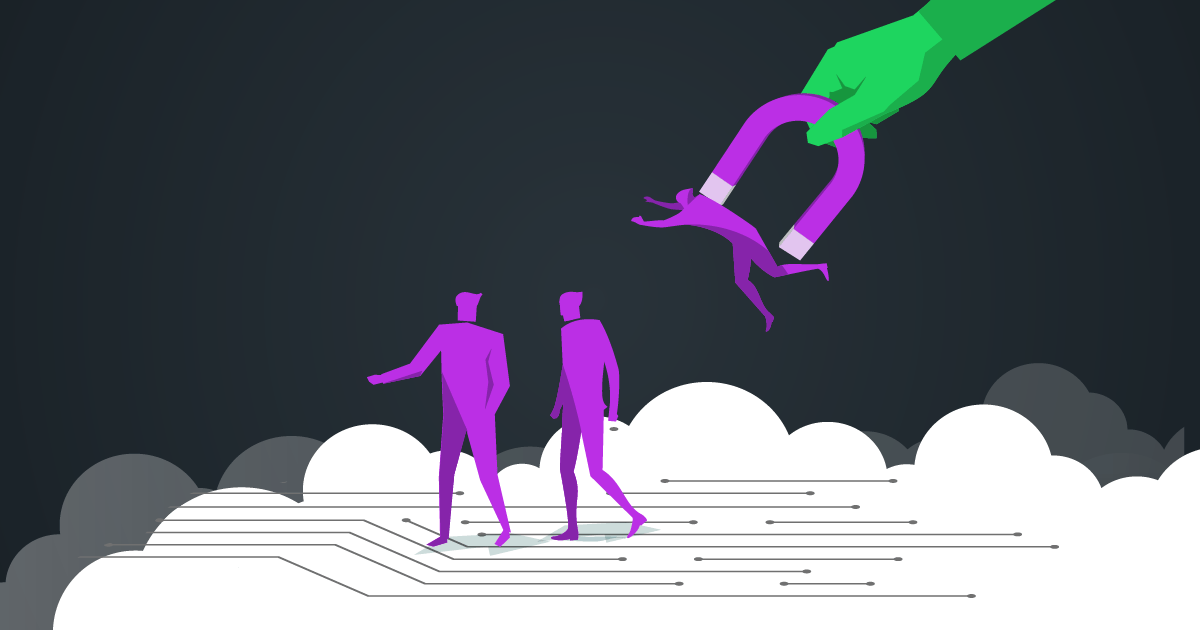
At a recent SaaS conference, Patrick Campbell (Co-Founder & CEO of ProfitWell) presented findings from an in-depth analysis of over 3,000 SaaS companies. The results were a wake-up call for the industry: while many producers remain fixated on acquiring new customers, the real drivers of sustainable growth are often overlooked, namely, prioritizing SaaS customer retention and smart monetization strategies.
How can SaaS companies break out of the acquisition-only mindset and tap into monetization and retention? The key is to truly understand your customers and what they value. This might sound obvious, but many companies struggle with it in practice. Campbell’s number one piece of advice for SaaS businesses was literally: “Talk to your customers!”. This was an anecdotal yet powerful takeaway. After diving into the data, the human element still reigns supreme.
What does talking to customers entail? It goes beyond standard customer support calls or sending the occasional survey. It means implementing a customer development process as part of your business strategy:
- Gather Qualitative Feedback Regularly: Schedule periodic interviews with a range of customers – new sign-ups, power users, recently churned customers – to learn why they chose you, what they value most in your service, and what might be missing. You’ll uncover which features truly matter to them and which ones they hardly use.
- Identify Buyer Personas & Use Cases: If you haven’t already, categorize your users into key segments or personas. For each persona, figure out their primary use case and the specific pain points or goals that make your product valuable to them. This helps in crafting packages or tiers that align with each segment’s willingness to pay. (For example, one segment might value advanced security features and be willing to pay a premium, while another segment might only need basic features at a lower price.)
- Quantify Value Drivers: Use customer data analysis to complement the anecdotes. If possible, track usage data within your product to see which features drive engagement or outcomes for customers. Combine this with your interview insights to pinpoint what features or services correlate with customers sticking around (retention) or upgrading their plan (monetization).
- Experiment with Pricing and Packaging: Don’t be afraid to adjust your pricing model as you learn more. In fact, studies have shown that most companies change their pricing far too infrequently – on average, only once every 3 years. A better practice is to treat pricing as an ongoing experiment (while being cautious not to alienate existing users unfairly). This could involve introducing changes to your product packaging, like add-on products, creating value-based tiers with valuable features, or offering localized pricing and packaging for different regions. Each change should be aimed at better aligning the price to the value that different customers get. For instance, a “light” tier for price-sensitive small businesses and a “premium” tier for enterprises that require more, each priced appropriately.
- Adopt a Multi-Price Mindset: One tactic mentioned is having a multi-price mindset – essentially, offer multiple plans or editions to support value-based pricing rather than a one-size-fits-all price. This concept is much more advanced compared to the Good-Better-Best pricing model. This way, you can capture more market share (with a low-end offering) and more revenue from big customers (with a high-end offering), instead of pricing everything in the middle. The research indicates that a thoughtful tiered pricing strategy, when based on real customer personas, can significantly boost overall ARPU without scaring off newcomers.
By engaging deeply with users, you also naturally improve SaaS customer retention. You’re signaling that you care, and you’re more likely to build features or provide service that actually solve their problems. It creates a feedback loop: the more you understand and deliver what customers want, the more value they get, and the longer they stay (and pay). This is the essence of being customer centric. It sounds almost cliché, but in practice it requires cultural and operational commitment – something many “acquisition-addicted” companies must consciously develop.
Another concept emphasized is balanced growth. Balanced growth means your company sets goals not just for new customer counts, but also for net retention and ARPU expansion. It means the product team, marketing team, and sales team all work together, aligned to maximize customer lifetime value and secure renewals, not just the first sale. In the presentation, examples of companies with “balanced” focus were contrasted against those overly skewed to acquisition. The balanced companies treated monetization (pricing strategy) and retention (customer success) as equally important to acquiring new users. This balanced approach is increasingly seen as a best practice among successful SaaS firms.
Embracing the SaaS Customer Retention Mindset
For software providers transitioning from on-premises models to SaaS, the insights from the study offer both a warning and a clear path forward. The warning is that you can’t win in SaaS by acquisition alone – not in a market where customers have so many choices and so much power. Chasing growth while ignoring the value delivered to (and derived from) your customers is a recipe for high churn and unsustainable economics. The path forward is to adopt a SaaS monetization mindset: one that treats pricing and customer retention as science-backed, strategic disciplines at the core of your business and support the implementation using an advanced entitlement management system.
In practical terms, embracing this mindset could mean:
- Re-training your sales and product teams to focus on customer success stories, not just customer logos. For instance, measure your team on how well customers adopt features and on upsell rates, in addition to new bookings.
- Investing in tools and platforms for software monetization – such as licensing management, monetization analytics, and billing systems – that give you the flexibility to experiment with new pricing models or product bundles without disrupting service. (If your current software infrastructure makes it hard to, say, offer a usage-based plan or a limited free tier, updating that is part of the strategy.)
- Continually educating your team with data. Make it visible to everyone that, for example, “our monthly churn is 2%. If we can bring it to 1.5%, that’s worth more than adding 50 new customers next quarter” – because the math from Campbell’s research supports that kind of statement. This helps shift the SaaS KPI culture toward valuing lifetime customer value over short-term acquisition spikes.
SaaS Pricing Strategy as a Core Customer Experience
Too often, SaaS pricing models are treated as a back-office function, disconnected from the day-to-day experience of the customer. In reality, every interaction with your pricing model, whether it’s choosing a plan, considering an upgrade, or evaluating usage, becomes a touchpoint that can either build loyalty or create friction.
To truly differentiate, leading SaaS companies are:
- Designing clear, value-based pricing tiers that reflect the needs and willingness to pay of distinct customer segments.
- Offering flexible monetization models (such as usage-based pricing, subscription, or hybrid approaches) that adapt as customers grow and their requirements evolve.
- Communicating pricing changes and options proactively and transparently, reducing surprises and building trust.
By integrating pricing strategy into the broader customer experience, providers can reduce SaaS churn rates, create upsell opportunities, and foster long-term loyalty. Treating pricing and monetization as strategic levers, rather than afterthoughts, transforms not only revenue outcomes but also the quality of the customer relationship.

Revenera Monetization Monitor: 2026 Outlook
501 senior leaders at global technology companies share their thoughts on monetization trends for 2026 and beyond. See the results >>>
Finally, it’s worth noting that these lessons don’t imply that you stop seeking new customers. Rather, it’s about broadening your SaaS growth playbook. Imagine two SaaS companies: one wins 100 new customers a month but loses 90 due to churn and never optimizes pricing, while another wins 80 customers a month but keeps churn low and gradually increases ARPU by delivering more value – the second company will almost certainly outperform the first in the long run. The goal is to be that second company.
In the subscription economy, growth is a marathon, not a sprint. The winners are those who can acquire customers and keep them happy and make a fair profit from that relationship. The talk from ProfitWell’s CEO reinforces that revenue growth is healthiest when it comes from a balanced mix of acquiring, retaining, and monetizing. If you are a software provider moving to SaaS, take these lessons to heart: start viewing your existing customers as your greatest asset. Invest in understanding them, deliver continuous value, and don’t be shy to charge for that value in a way that aligns with their success. That’s a win-win scenario – your customers achieve their goals with your software, and you grow your recurring revenue in a sustainable way.
Bottom line: Don’t just chase the next customer; take care of the ones you already have and build a business model that grows with them. In a cloud-driven world, software monetization and customer-centric thinking are your keys to thriving beyond the on-prem days. By overcoming the acquisition addiction and leveraging all your growth levers, you’ll be well on your way to SaaS success.
See how Revenera’s entitlement management solutions can help you prevent churn while identifying upsell and cross-sell opportunities in this short video: